How to Scout the Perfect Rough Terrain Forklift for Your Overseas Operations?

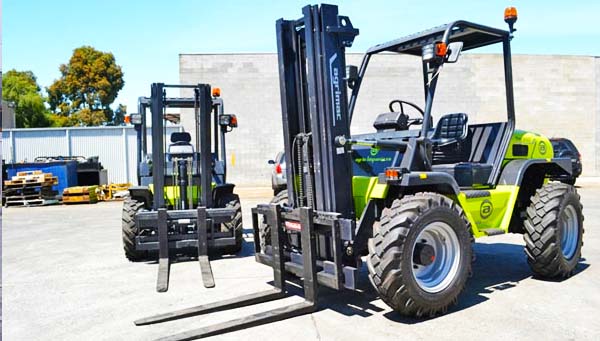
Are you worried about picking a rough-terrain forklift? Are you always thinking that it will suit what you think we need to use it for when you buy it? But choosing the right rough terrain forklift isn't just about buying, it's about combining your business needs with local terrain and safety standards.
Understanding the core features that make forklifts suitable for rugged terrain and different climates is vital. I (CEO of IVITAL) will guide you through this, focusing on durability, versatility, and operator safety - all necessary to maintain high productivity in unfamiliar terrain.
Remember that in the quest for the perfect machine, it's the details that make the difference. Whether it's pneumatic tyres or strong engine power, every element plays a vital role.
What Features Define the Best Rough Terrain Forklifts?
In the course of my selling so many rough terrain forklifts, many people relate to this issue, but everyone has a different understanding of rough terrain; in fact, the simplest is still a direct description of the working environment in which the forklift is used. This will allow our sales staff to recommend better which forklift is right for your business.
The following points are among the more important ones:
- Tires and Traction
- Drivetrain and Ground Clearance
- Rugged Construction
- Lifting Capacity and Reach
- Stability and Safety Features
- Maneuverability
- Versatility
What Are the Must-Have Safety Features in Rough Terrain Forklifts?
When using forklift trucks outdoors, both the safety of the operator and the safety of the surrounding staff are crucial, so the safety of rough-terrain forklift trucks must include the following points:
-
Rollover/Tip-over Protection
-
Seat Belts
-
Backup Alarms/Warning Devices
-
Tire Design
-
Visibility Aids
-
Load Handling Aids

How Does Terrain Influence Forklift Choice?
The specific terrain conditions dictate the type of rough terrain forklift needed:
-
Gravel, dirt, mud - Require deep treaded pneumatic tires and 4-wheel drive for traction.
-
Slopes/Inclines - Need a low center of gravity, outriggers, and stability features to prevent tip-overs.
-
Soft/Loose Surfaces - High ground clearance and flotation tires help prevent getting stuck.
Considerations for Operating Forklifts in Different Countries
When operating a forklift in a different country, it is also essential that the Rough Terrain Forklift you purchase meets local emission standards and that you obtain the local laws and regulations for operating the forklift.Here are some key points to consider in Australia, the USA and Germany:
- Australia: In Australia, forklift operators must hold a valid Australian High-Risk Work Permit and are usually required to complete a training course and pass an assessment to Australian standards. The training includes Australian safety rules, operating skills, and other knowledge necessary to operate a forklift safely. In addition, operators must be at least 18 years of age, follow safe work procedures, properly use personal protective equipment (PPE), and report accidents, near misses, and hazards to the PCBU, supervisor, or health and safety representative (HSR).
- USA: In the USA, OSHA 29 CFR 1910.178 contains provisions for the safe use of powered industrial equipment for general industrial use. Specific requirements include 1910.178(l) (operator training), 1910.178(l)(1)(i) and 1910.178(l)(1)(ii) (employer's obligation to ensure that workers are competent before operating forklifts), and 1910.178(l)(4) (refresher training for forklifts). Employers are responsible for providing instruction and supervision to protect the welfare of their employees.
- Germany: In Germany, forklift operators must be trained and certified under the German Occupational Safety and Health Act (Arbeitsschutzgesetz, ArbSchG). The training consists of theoretical and practical parts, and operators must pass an examination to obtain the necessary certificates. In addition, forklift operators must observe specific safety guidelines, such as wearing appropriate personal protective equipment and observing speed limits.
Cost Considerations for Rough Terrain Forklifts: Initial vs. Long-Term
-
Initial Cost: New rough terrain forklifts typically range from $13,400 to $45,300, while used equipment can cost between $6,000 and $13,000. The cost depends on factors such as size, features, and condition. Larger and more feature-rich models tend to be more expensive, while used forklifts can offer significant cost savings.
-
Long-Term Costs: Rough terrain forklifts require regular maintenance, including engine and hydraulic system checks, tire replacement, and lubrication. These costs can vary depending on the usage and environment of the forklift. Additionally, spare parts may need to be replaced over time, impacting the overall cost.
-
Operating Costs: Fuel consumption and tire wear are significant factors in the long-term cost of operating a rough terrain forklift. Four-wheel drive can help reduce fuel consumption and tire wear, saving money in the long run.
-
Training and Certification: Operators of rough terrain forklifts may need specialized training and certification, which can add to the long-term cost. This may involve additional costs for training courses, assessments, and ongoing safety updates.
-
Fuel Efficiency: Fuel efficiency can impact the long-term cost of operating a rough terrain forklift. Tier 4 Final engines with Diesel Oxidation Catalysts (DOC) can provide increased fuel efficiency and faster response times, which can help offset fuel costs over time.
Conclusion
Determining the best rough terrain forklift for your overseas operations requires careful consideration of performance characteristics, reliability, cost, and compliance with local regulations. With the right approach and resources, you can ensure that your investment pays off in productivity, safety, and compliance. That's why your choice is more complex than just buying a forklift. You need professional service, so trust us to give you the best.
Why do these 5 countries purchase the most forklifts made in China.
Is Going Electric with Forklifts Really Cost-Effective?