How to Determine a Forklift's Crane Rack Classification? The critical classification criteria are revealed!


Forklift Carriage Classes
- Class 1: For small forklifts with load capacities up to 2,000 lbs.Carriage Height:13”
- Class 2: Medium capacity forklifts, handling loads from 2,001 lbs to 5,500 lbs.Carriage Height:16”
- Class 3: Larger forklifts that can manage loads between 5,501 lbs and 11,000 lbs.Carriage Height:20”
- Class 4: Heavy-duty forklifts designed for loads over 11,001 lbs.Carriage Height:25”
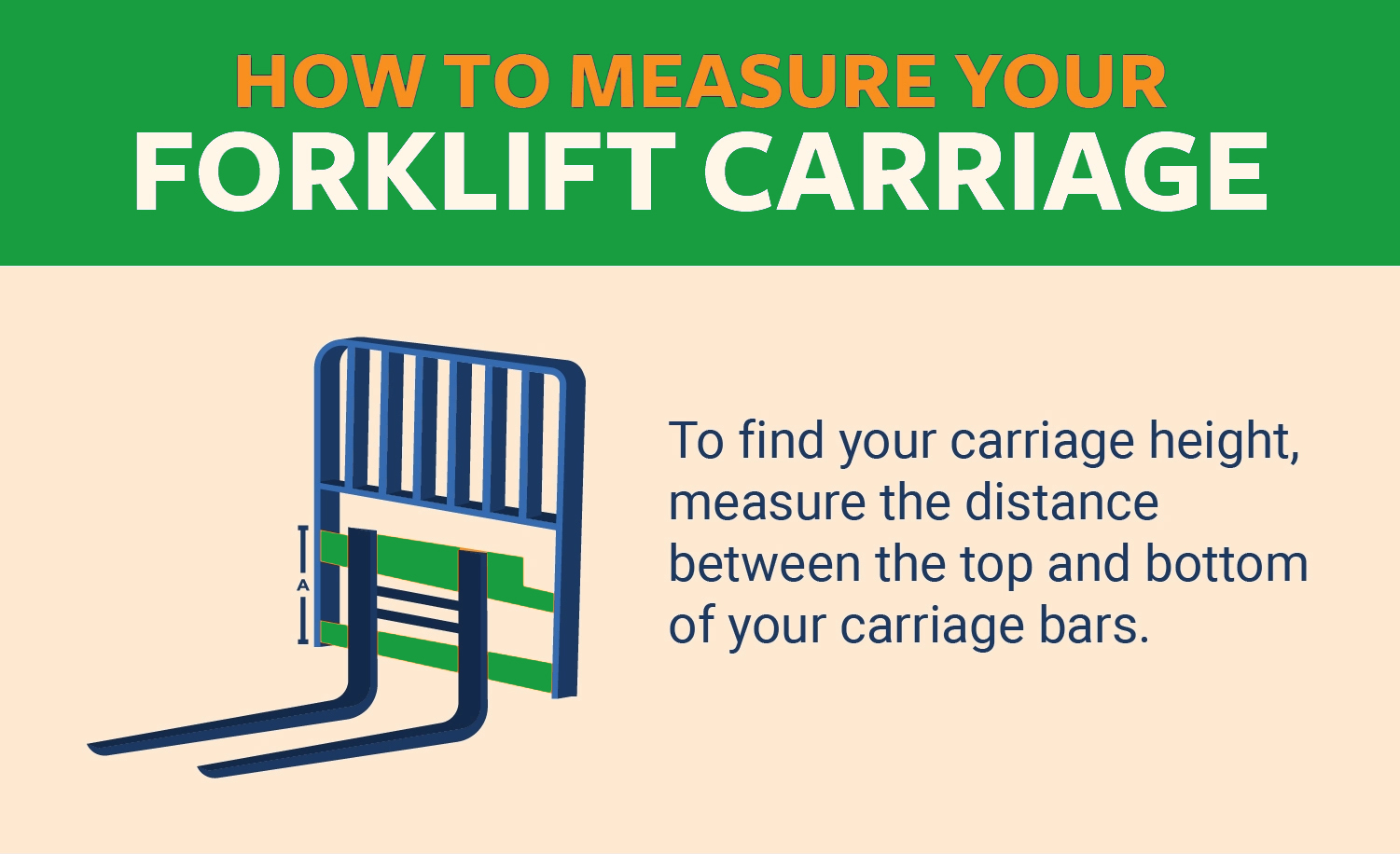
To measure your forklift carriage height, measure the distance between the top and bottom of your carriage bars. Then, refer to the carriage classification chart to determine your forklift's carriage class.
While the carriage class provides insight into your forklift's capabilities, checking your machine's data plate for its exact specifications, abilities, and limitations is essential. The data plate and exact specifications are the most reliable sources of information when selecting the right vehicle for a job.
What Parts Are Connected to the Forklift Carriage?
The fork carriage is a foundational forklift part, a necessary support structure for the machine’s function. Without its support, a forklift couldn’t lift. Here’s how it connects to some of the other main parts of a forklift:
- Forks: The forks on a forklift may be controlled by the mast, but the carriage attaches them to the vehicle and makes them stable.
- Load backrest: The load backrest attaches to the sides of a forklift carriage. It’s a stabilizing component, preventing the forklift’s load from falling back toward the operator.
- Mast: A forklift carriage acts as a connecting part between the mast and forks. By supporting the mast, the carriage helps keep it stable as loads move up and down the mast channel.
How to Choose the Right Pallet Jack Battery
TOP 5 You Must Know About Forklift Pricing